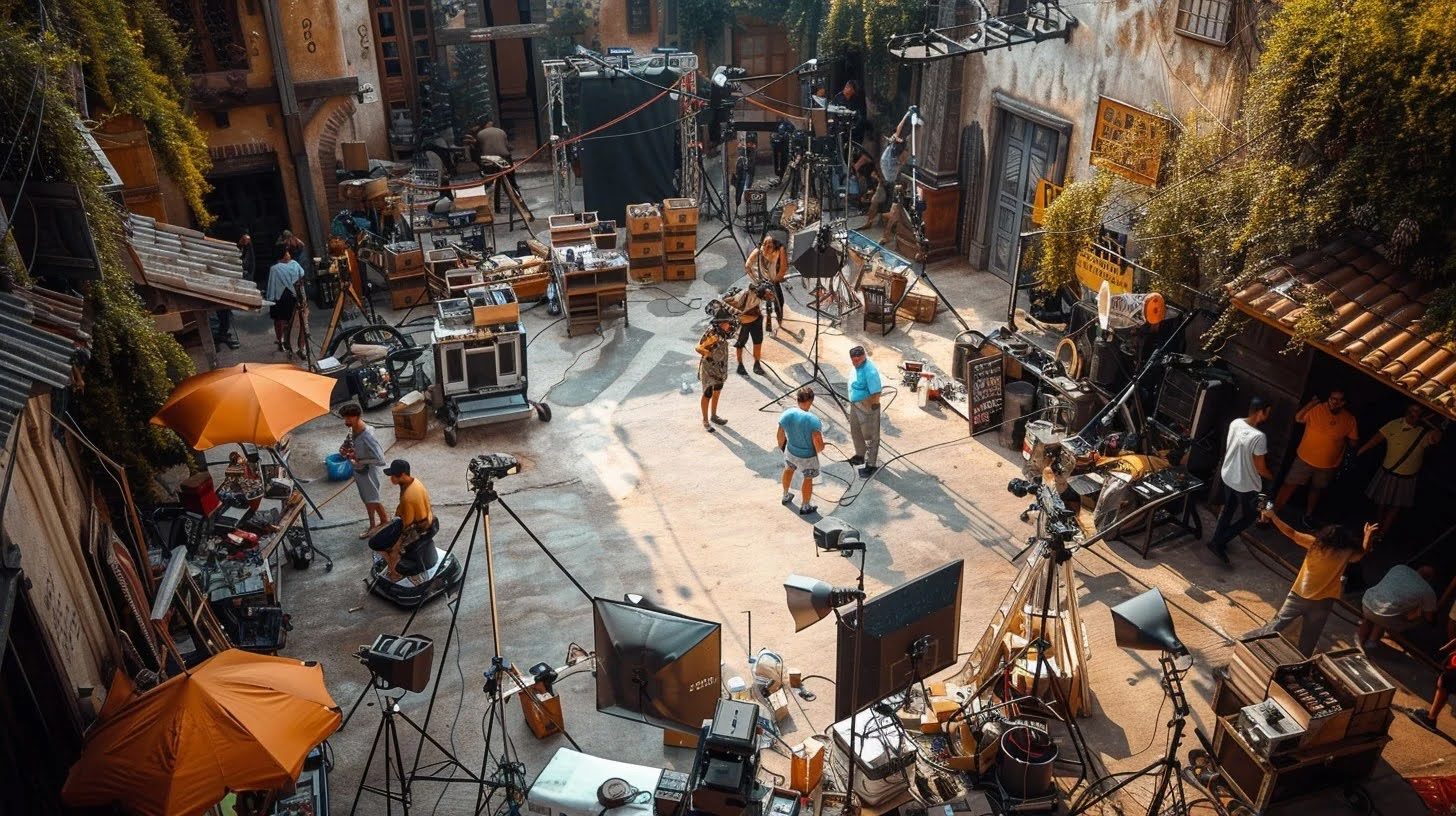
Filming in a busy city brings energy, realism, and production value you can’t fake on a soundstage. It also brings traffic congestion, pedestrian interference, theft risks, and unpredictable disruptions.
If you’re planning a shoot in a high-traffic urban environment, security cannot be an afterthought. It needs to be built into your production plan from day one.
Here’s what that looks like in practice.
Why Urban Film Shoots Demand Strategic Production Security
City environments are controlled chaos. You’re managing crew members, cast, equipment trucks, street closures, public curiosity, and sometimes hundreds of bystanders within a few square blocks.
Without a structured Production Security plan, small issues escalate quickly:
- Pedestrians walk into active scenes
- Equipment is left exposed during resets
- Traffic backups frustrate nearby businesses
- Unauthorized individuals access restricted areas
Professional security teams create defined perimeters, control access points, and coordinate with local authorities to keep production moving without unnecessary interruptions.
In short: they protect your timeline and your budget.
Production Security Risk Assessment Before Cameras Roll
Every successful urban shoot starts with a site-specific risk assessment.
Before production begins, security professionals should evaluate:
- Foot traffic patterns
- Traffic flow and parking logistics
- Nearby businesses and residential buildings
- Equipment staging areas
- Entry and exit routes
Urban locations change by the hour. A downtown street at 6 a.m. is very different from the same block at 4 p.m. Production Security teams account for these shifts and plan accordingly.
This early planning prevents reactive decision-making during filming, which is where costs and liabilities tend to spike.
Managing Crowds and Public Interaction
High-traffic areas attract attention. The moment cameras appear, so do phones, onlookers, and sometimes individuals trying to push boundaries.
Security officers play a critical role in:
- Establishing clear boundaries
- Directing pedestrian traffic
- Protecting cast from unwanted interaction
- Maintaining a calm, professional presence
Experienced officers know how to be visible without being disruptive. The goal isn’t intimidation. It’s controlled order.
When crowd management is handled properly, your crew can focus on performance and execution instead of constant interruption.
Protecting Equipment and Assets with Production Security
Urban film shoots often involve high-value equipment staged in tight, exposed spaces. Cameras, lighting rigs, generators, wardrobe trucks, and tech stations become easy targets if left unsecured.
Production Security teams safeguard:
- Equipment trucks and loading zones
- Temporary storage areas
- Restricted backstage zones
- Overnight location setups
Theft and tampering are not just financial risks. They delay production and damage reputation. Preventative security presence significantly reduces those risks.
Traffic Control and Municipal Coordination
City shoots rarely operate in isolation. They affect commuters, delivery routes, and nearby businesses.
Security professionals coordinate with:
- Local law enforcement
- Traffic control authorities
- Property managers
- Event coordinators
Clear communication minimizes friction and prevents complaints that could jeopardize permits or future filming opportunities.
Professional Production Security teams understand that maintaining strong community relationships is part of the job.
Discretion and Executive-Level Protection
Urban shoots sometimes involve high-profile talent. That increases security complexity.
Controlled access points, credential checks, secure holding areas, and movement coordination protect talent without creating unnecessary spectacle.
Discretion matters. The right team blends into the environment while maintaining full situational awareness.
Why Production Security Should Be Integrated, Not Added On
Security works best when it’s embedded into the production plan, not layered on after issues arise.
When experienced professionals are involved early:
- Permits are supported with clear security protocols
- Crew movement is streamlined
- Emergency response plans are established
- Liability exposure is reduced
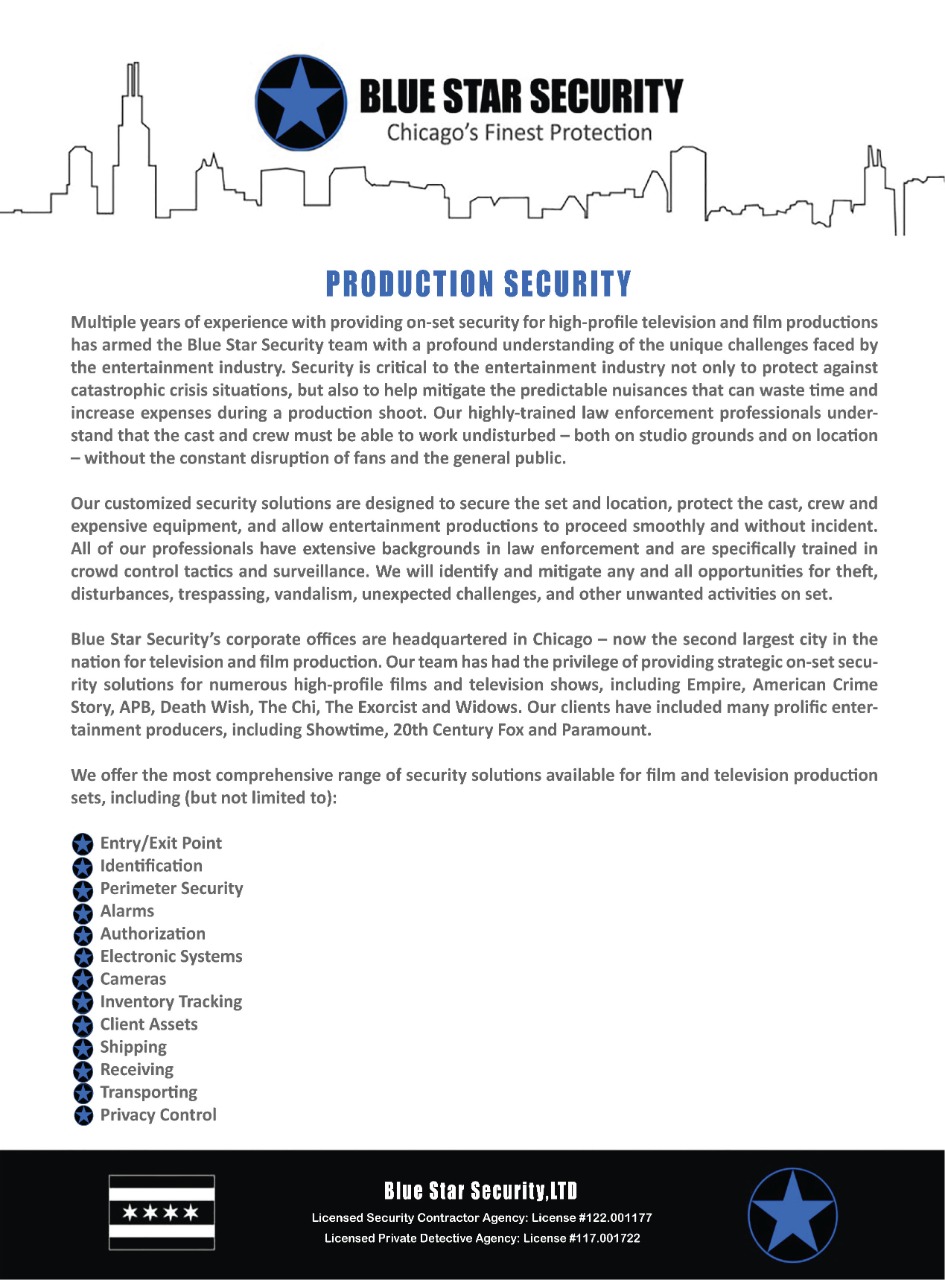
Blue Star works alongside production managers, location scouts, and coordinators to design practical, location-specific security strategies that support the creative process without slowing it down.
Urban film shoots move fast. Your security strategy should move faster.
If you’re preparing for a shoot in a high-traffic city environment, learn more about Blue Star’s Production Security services here:
https://bluestarsecurity.com/services/production-security
Frequently Asked Questions
When should Production Security be brought into the planning process?
Ideally during location scouting or early pre-production. Early involvement allows for proper risk assessment and coordination with city officials.
How many security officers are typically needed for an urban shoot?
It depends on location size, foot traffic, production scale, and whether high-profile talent is involved. A professional assessment determines the appropriate staffing level.
Can security assist with traffic and pedestrian control?
Yes. Trained personnel manage controlled access points and help maintain safe pedestrian and vehicle flow in coordination with local authorities.
Do you provide overnight equipment protection?
Yes. Production Security teams can monitor locations and equipment during off-hours to prevent theft or tampering.
Is security visible to the public?
Security presence is professional and strategic. The goal is to maintain safety and control without disrupting the production atmosphere.